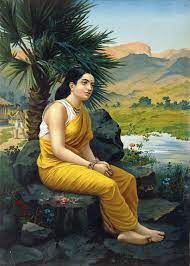
ORIGIN: Hindu (Epic and Puranic)
TYPE: Chthonic or earth goddess
KNOWN PERIOD OF WORSHIP: circa 300 BCE and earlier through to present day.
SYNONYMS: An avatara of Laksmi
ART REFERENCES: Sculptures generally in bronze, but also in stone.
LITERARY SOURCES: Ramayana of Valmiki and later Puranic literature.
INFORMATION: In Vedic mythology Sita is strictly an earth deity, born from a furrow and associated with ploughing and ploughed fields. She appears as the consort of the rain gods Indra and Parjanya. She usually stands to the right of Rama. In later times, effectively from 200 CE onward, Sita (see also Radha) is the consort of Rama, and one of the major reincarnations of the god Visnu, though she is generally eclipsed by the goddess Laksmi with whom she is seen as a separate aspect.
Legend gives Sita an unhappy life, though she epitomizes the perfect Hindu wife. Early in her marriage to Rama she is abducted by the foreign god Ravana, who carries her off to Lanks [Sri Lanka], where he imprisons her in a garden. Maintaining total fidelity to her husband, she returns to him inviolate, but he is sceptical of her purity and rejects her. Eventually, when she has threatened to immolate herself through the inner fire of her purity, Rama grudgingly has her back, though only briefly. His doubts return and, pregnant, she is banished to exile where she gives birth to twin sons. Rama's rejection finally takes its toll. Sita begs her mother, the earth, for salvation, whereupon a golden throne rises from the ground. She takes her place on it and descends forever while Rama is left eternally to mourn his loss.
ATTRIBUTES: Blue lotus and a single braid of hair.